

Free Consultation

Tax debt and liens can stall a mortgage, but they don't always kill the deal. Here's what lenders look for and how to clear the path.
Written by
Jared Thomas
Published in
08/2026

Buying a home is stressful enough but when you owe the IRS, the process becomes even more complicated. Many people are surprised to learn that tax debt can directly affect your mortgage approval, even if your credit score is high or you’ve saved enough for a down payment.
Mortgage lenders take IRS debt seriously because it represents a federal obligation that legally comes before your mortgage. That means if money gets tight, the IRS gets paid first and lenders know this increases their risk.
The reality is simple: Yes, you can buy a home with IRS debt but only if you handle it correctly.
The key is understanding how lenders view tax debt, what the IRS requires, and what you must fix before applying.
Yes, IRS debt can absolutely affect your ability to get approved for a mortgage. While having tax debt doesn’t automatically disqualify you, it does make lenders more cautious because IRS obligations are considered high-priority debts. If you owe back taxes, lenders worry that the IRS could garnish wages, levy accounts, or place a tax lien, all of which make you a riskier borrower.
Mortgage lenders review your financial stability, debt-to-income ratio, and payment history. Unresolved IRS debt signals financial instability, and any missing returns or ongoing IRS collections can lead to an automatic denial. However, if you’re in a formal, active IRS payment agreement and have documented proof of compliance, many lenders including FHA, VA, and sometimes conventional lenders will still approve your loan.

IRS debt affects your mortgage approval in several indirect but powerful ways, even if the IRS doesn’t report debts to credit bureaus. While the IRS won’t directly place tax debt on your credit report, the consequences of unresolved tax issues such as tax liens, levies, and damaged financial ratios can significantly reduce your chances of getting approved for a home loan.
First, an IRS tax lien (if filed) becomes public record and may appear on background checks used by many lenders, signaling severe financial distress. Even without a lien, IRS debt reduces your available income because future payments to the IRS must be factored into your debt-to-income (DTI) ratio, one of the most important qualifications for a mortgage.
IRS debt also impacts your financial profile by draining savings, increasing monthly obligations, and creating instability in your cash flow. Mortgage lenders want predictable, reliable income and consistent financial management. Unpaid tax bills or unfiled returns send the opposite message.

Different mortgage programs treat IRS debt differently. Some are flexible as long as you're in a compliant payment plan, while others are much stricter. Here’s how each major loan type handles tax debt in 2025:
FHA Loans
FHA is the most forgiving when it comes to IRS debt. You can still qualify as long as you’re in a formal payment plan with the IRS, have made at least one monthly payment, and the amount is included in your debt-to-income (DTI) ratio. FHA will not approve the loan if your tax debt is in collections, you have a tax lien without a payment plan, or you haven’t filed all required tax returns.
VA Loans
VA loans allow borrowers with IRS debt only if they are fully compliant and actively paying under a written agreement. You must show at least 12 months of on-time payments, unless the lender gives an exception. VA lenders also check for unfiled tax returns. If any are missing, your loan will be paused until everything is filed and verified.
Conventional Loans (Fannie Mae/Freddie Mac)
Conventional lenders are stricter. You can still be approved, but only if:
If a federal tax lien exists, the lender may require the IRS to subordinate the lien so the mortgage takes priority, something that can delay or complicate the process.
USDA Loans
USDA loans are designed for low-to-moderate-income buyers, so compliance is strict. Borrowers cannot qualify if they owe the IRS unless they have a valid installment agreement, are current with payments, and have filed all required returns.
Can You Get a Mortgage With an IRS Payment Plan?
Yes — in many cases, you can get approved for a mortgage while on an IRS installment agreement, but only if the lender can verify that you’re fully compliant and consistently making payments. Lenders want reassurance that your IRS debt won’t interfere with your ability to pay your mortgage. That means your payment plan must be official, active, and affordable within your overall debt-to-income ratio (DTI).
Required documentation
Lenders typically require:
Without these documents, lenders will not treat your IRS debt as a manageable obligation.
How long you must be in the plan
Most mortgage programs require a payment history before they approve the loan:
Missed payments within this period can force lenders to delay or deny your application.
How lenders calculate monthly payments
The IRS installment payment is added directly to your DTI calculation. The lender counts the official monthly payment listed on your IRS agreement, not the total tax balance. Even if you pay extra or make lump payments, only the contracted monthly amount is used. A high IRS payment can reduce how much home you qualify for.
What happens if you miss payments
If you miss or skip IRS payments while applying for a mortgage:
Consistency is key, staying fully current on your IRS plan is often the difference between mortgage approval and rejection.
Tax liens are one of the strongest signals lenders look at when reviewing a mortgage application and they can stop the approval process immediately. A tax lien means the IRS or a state government has a legal claim against your assets, and lenders see that as a major risk.
How tax liens affect mortgage approval
A tax lien severely limits your ability to get a home loan because lenders know the government gets paid before they do. This makes you a high-risk borrower. In most cases, lenders will not approve a mortgage while a lien is active unless you’ve already entered a verified repayment agreement and have several months of on-time payments.
Federal vs. state tax liens
Federal tax liens are more serious and follow you across all states, making them visible to any lender nationwide. Because the IRS has broad authority to collect, lenders almost always require these liens to be fully resolved or withdrawn before approval. State tax liens are also major obstacles, but rules vary depending on the state.
Removing or withdrawing a tax lien (Form 12277)
If you’re trying to qualify for a mortgage, getting a lien withdrawn is often the best solution because it removes the lien from public record entirely. This is done using Form 12277, which you can file if the tax debt is paid in full, the lien was filed in error, or you’ve entered a qualifying direct-debit installment agreement.

Wage garnishments and bank levies signal to lenders that the IRS has already begun enforced collection, a major indicator of financial distress. Because mortgage underwriters focus heavily on stability and risk, these actions can make it significantly harder (and sometimes impossible) to qualify for a home loan until the issue is resolved.
Bank levies and available balances
A bank levy drains funds directly from your account, leaving you with reduced cash reserves, a key factor mortgage lenders evaluate. Low or unstable balances suggest you may not have the resources to handle mortgage payments, emergencies, or closing costs.
Garnishments lowering qualifying income
Wage garnishments reduce your take-home pay, which directly lowers your qualifying income for a mortgage. Because lenders calculate your debt-to-income ratio using your net income after garnishment, a garnished paycheck can push your ratio too high to qualify.
Lender risk concerns
Any active garnishment or levy signals that the IRS has escalated collection efforts, a major red flag to lenders. They worry that if you’re behind with the government, you could fall behind with them as well. Underwriters may require documentation that the debt is now in a payment plan, that collections have stopped, or that you have negotiated a formal resolution before issuing approval.
When you apply for a mortgage while owing the IRS, lenders need additional documents to verify that your tax situation is under control. These documents help underwriters confirm that your debt is being actively managed, your payments are consistent, and there is no risk of unexpected IRS collection actions during the loan term.
IRS installment agreement confirmation
Lenders require a formal agreement letter from the IRS showing the exact terms of your payment plan: monthly amount, start date, and status. This proves your debt is in good standing and no levies or garnishments are pending.
Proof of on-time payments
Most lenders want at least three consecutive months of on-time IRS payments. They may ask for bank statements, IRS payment confirmations, or wage deduction records to verify stability.
Recent tax returns
Underwriters typically need your most recent one or two federal tax returns to confirm income, business activity, and whether you’re current on required filings. Unfiled tax years can halt the mortgage process immediately.
IRS transcripts
Verification of tax records through IRS accounts or wage & income transcripts helps lenders ensure your tax filings match the IRS data. Transcripts also show whether you owe additional years of debt or are under review.
Explanation letters
Lenders usually require a brief letter explaining why the IRS debt occurred and what steps you’ve taken to resolve it. A clear, professional explanation reassures underwriters that the issue is controlled and unlikely to reoccur.
When you’re trying to buy a home, resolving IRS debt isn’t just about lowering what you owe, it’s about showing lenders that your finances are stable and under control. The right IRS relief program can eliminate red flags, stop enforced collection, and make you a much stronger mortgage candidate.
Installment agreements
An installment agreement is the most mortgage-friendly IRS resolution. Once you enter a payment plan and make a few months of on-time payments, most lenders will consider your debt “in good standing.” The IRS also pauses aggressive actions like levies, helping stabilize your financial profile.
Offer in Compromise (OIC)
An OIC settles your tax debt for less than you owe and for homebuyers, getting approved can significantly improve your chances of qualifying. Once accepted, the IRS releases liens and closes your collection file, removing major lending obstacles.
Currently Not Collectible (CNC)
If you’re in financial hardship, CNC status stops all IRS collection activity, including levies and garnishments. While some lenders may still want explanations, CNC can restore income stability and stop negative actions that would otherwise block mortgage approval.
Penalty abatement programs
Penalty reductions, especially First-Time Penalty Abatement or Reasonable Cause Abatement can dramatically decrease your total IRS balance. A smaller balance may help you qualify for better installment terms or eliminate the debt entirely before applying for a mortgage.

Even if you’re eager to buy a home, there are situations where applying too soon can almost guarantee a denial. Mortgage lenders need to see financial stability, IRS compliance, and predictable payment behavior and certain IRS issues signal the opposite.
Active levies or garnishments
If the IRS is already taking money from your bank account or paycheck, lenders will immediately decline your application. Levies and garnishments indicate severe delinquency and financial instability, and they reduce your usable income.
Unfiled returns
No lender will approve a mortgage when you have missing tax returns. Underwriters rely on filed returns to verify income, business profit, and compliance history. The IRS may also file Substitute for Return (SFR) assessments, creating inflated balances that further complicate financing.
High monthly IRS payments
If your IRS installment agreement requires payments that are too large, your debt-to-income ratio may become too high to qualify for a mortgage. Lenders count your IRS payment just like any other debt. If the monthly amount strains your budget, you may need to renegotiate your plan or pursue a different relief option before applying.
Outstanding lien issues
A tax lien, federal or state is one of the biggest obstacles to mortgage approval. Most lenders won’t move forward until the lien is released, withdrawn, or successfully negotiated. Even if you’re in a payment plan, unresolved liens can still block underwriting.
Getting approved for a mortgage when you owe the IRS is absolutely possible but only if your tax situation is clean, documented, and fully compliant. Safeway Tax specializes in helping taxpayers resolve IRS problems specifically in a way that strengthens mortgage approval, not just reduces debt.
We start by reviewing your tax transcripts, balances, payment history, and any red flags that might block a mortgage. Then we create a tailored plan, whether that means entering a qualifying installment agreement, negotiating a lien withdrawal, requesting penalty relief, or even settling your balance through an Offer in Compromise.
Most importantly, we help stabilize your financial profile so you can show lenders consistent income, predictable payments, and zero active IRS enforcement.

Gig workers often discover that earning independent income brings unexpected IRS attention.


Running a small business often means juggling payroll, invoices, suppliers, and cash-flow surprises

Freelancers often discover that earning income independently brings freedom but also tax obligations that can

IRS debt grows quietly, and many taxpayers don’t realize they’re in trouble until garnishments, liens, or intimidating letters arrive.

Few things hit harder than waking up to a bank account you can’t touch. Your debit card declines

Falling behind on taxes is extremely common for self-employed and 1099 workers. Income changes, missing 1099 forms
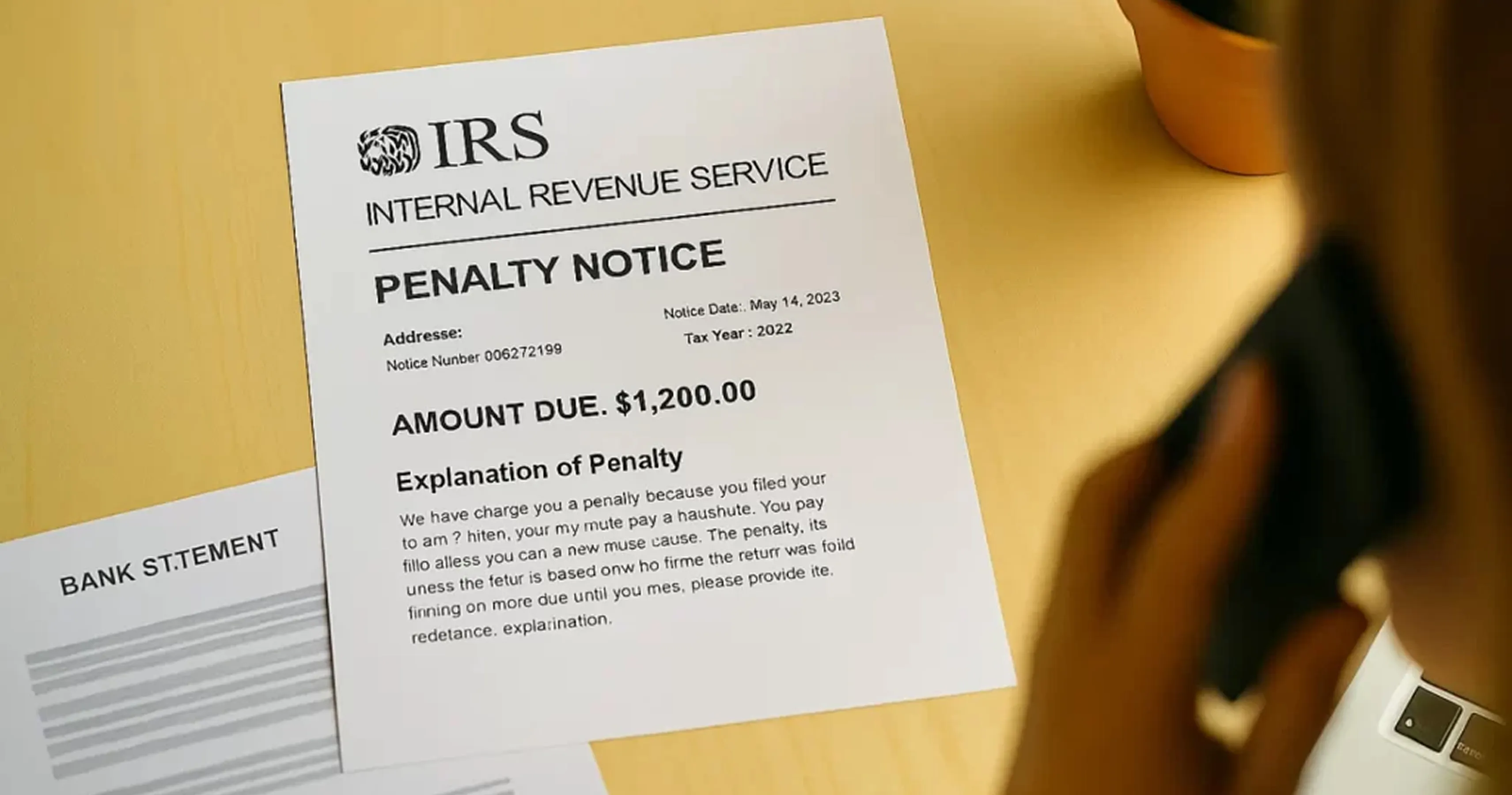
IRS penalties can build up fast, sometimes adding thousands of dollars to your balance before you even realize what happened.

Ignoring an IRS letter might feel easier than opening it, especially when you’re stressed, behind

Crypto trading feels exciting until tax season arrives and you realize your wallets, swaps, and rewards don’t neatly fit into a standard tax form.
Receiving an IRS Final Notice is one of the most serious moments a taxpayer can face.

Choosing the right IRS relief program can be the difference between finally getting ahead or staying trapped in tax debt for years.

Discover how our resources and experts can help you keep more of your money.

Crypto investors often realize too late that every trade, swap, or sale can create a taxable event especially in years
.png)
Many 1099 workers discover they owe the IRS only after a stressful notice arrives, because
Tax debt and liens can stall a mortgage, but they don't always kill the deal. Here's what lenders look for and how to clear the path.

If you’ve received an IRS notice mentioning a tax lien or levy, it’s completely normal to feel overwhelmed
IRS balances rarely stay the same. They grow month after month through penalties, interest, and compounding charges

Many nurses unknowingly take contracts that create tax-home problems, trigger multi-state filing requirements

Missing a quarterly tax payment feels stressful, but it happens to freelancers, small business owners

Owner-operators work long hours, run heavy miles, and manage expenses that change with every load
Once submitted, your information is reviewed by an IRS Relief Specialist, who will follow up to explain which IRS relief options may apply and answer any questions you have.
SafewayTax helps individuals and businesses address complex tax issues. By providing a few details, our team can quickly review your situation and help you move forward with confidence
© Copyright 2026 SafewayTax | All Rights Reserved.


Any estimates, projections, or statements on the Website regarding potential program performance are based on historical outcomes and client testimonials that reflect individual circumstances. Results depend on the specific facts of each client’s situation and may vary significantly. Your outcomes will depend on factors including, but not limited to, your financial condition and your ability to provide SafewayTax with complete, accurate, and timely information.
You are encouraged to carefully review all program materials before enrolling in any Service.
SafewayTax does not guarantee that your tax liability will be reduced by any specific amount or percentage, that your taxes will be resolved within a particular timeframe, or that you will qualify for any Internal Revenue Service (“IRS”) program or relief option. Interest and penalties may continue to accrue until your tax liability is fully satisfied with the IRS.
SafewayTax is an independent tax resolution firm and is not affiliated with or endorsed by the IRS. We do not assume your tax liabilities, make payments to creditors on your behalf, or provide legal, accounting, bankruptcy, or formal tax advice unless expressly stated in a separate written agreement. Services may not be available in all states, and fees may vary depending on jurisdiction and case complexity.
By providing your contact information, you expressly consent to receive communications from SafewayTax, including phone calls and SMS text messages, at the telephone number you provide. Such communications may include service-related updates, marketing messages, and other informational notices. Standard messaging and data rates may apply, and you are responsible for any charges imposed by your carrier.